Final Reflection Essay
8th December,
Rafia Tasafi
Prof. Albuerme
Final Reflection Essay
Claim 1: I learned how to cite evidence in MLA format properly.
One of the most practical skills I gained this semester was learning how to cite evidence correctly. Before this class, I knew MLA citations existed, but I didn’t really understand how to use them smoothly in my writing. While drafting my synthesis essay, I learned how to include citations like (Phillipson 45) and (Clares-Gavilán et al.) without interrupting the flow of my ideas.
Evidence:
In my early draft, I placed quotes without citations or expected the reader to know where my information came from. After reviewing MLA examples and revisiting the assignment instructions, I revised my essay so every idea that wasn’t mine had a proper citation.
I learned that citation is not just a technical requirement — it builds trust and authority in my writing. I re-read each paragraph, matched quotes to sources, and adjusted sentence structure so citations fit naturally. It made me realize academic writing is a conversation. Citing sources proves I’m engaging responsibly and ethically in that conversation.
Claim 2: I learned how to integrate multiple sources instead of summarizing them.
This was probably the biggest shift in my writing. The librarian workshop helped me understand what “synthesis” means — putting sources in conversation, not lining them up like separate summaries.
Evidence:
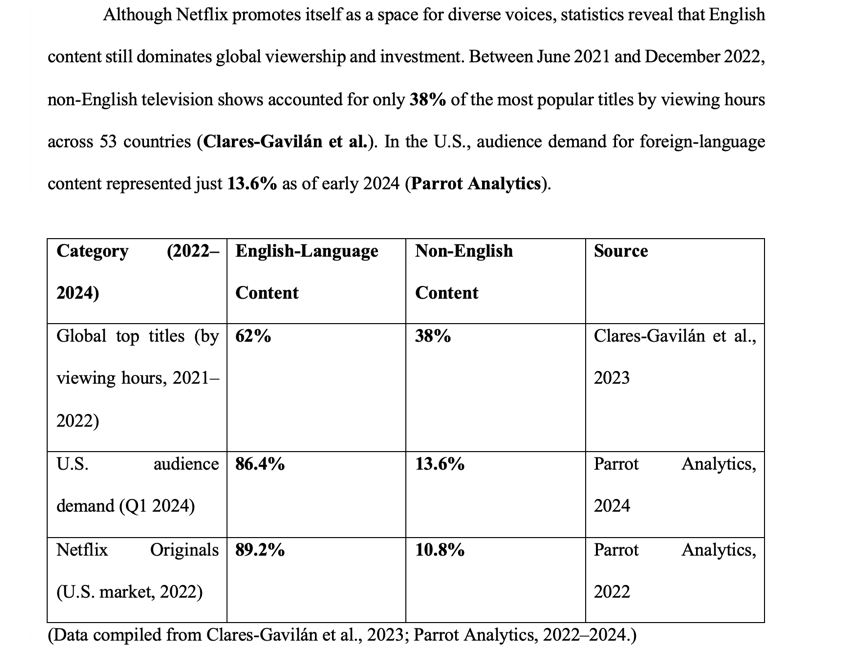
In my synthesis essay, I rewrote a paragraph to connect Phillipson’s idea of linguistic imperialism directly with Netflix viewership data. Initially, I explained each source by itself. After learning about synthesis, I revised the paragraph so the theory and data supported each other.
Synthesis is about making meaning, not just collecting quotes.: I added transitions like “This trend reflects what Phillipson calls…” which made the sources relate to one another.
It helped me understand how academic arguments are built. It also made my writing feel more original and analytical rather than descriptive.
Claim 3: I learned to analyze language politics through my own lived experience.
Writing the Language & Literacy Narrative opened my eyes to how my personal experience as an immigrant connects to larger cultural issues. Before this class, I never used personal stories in academic work because I assumed they weren’t “formal” enough. This class taught me the opposite.
Evidence:
In my narrative, I described how people in the U.S. sometimes assume I grew up here because of my English fluency, and how this affects my identity as a Bengali speaker. I connected this to Amy Tan’s reflections on her mother’s English and how she was perceived by society.: My personal experience is valid academic evidence when it reveals a larger pattern.
I analyzed my own moment — feeling “in between” languages — the same way Tan and June Jordan analyze theirs.
I learned that academic writing doesn’t require me to erase myself. My story carries meaning and authority, especially in discussions about language and power.
Claim 4: I learned how to create multimodal arguments using visual design.
The Translation 2 project forced me to step outside traditional writing and think visually. I learned how layout, color, symbols, and contrast can work together to make an argument
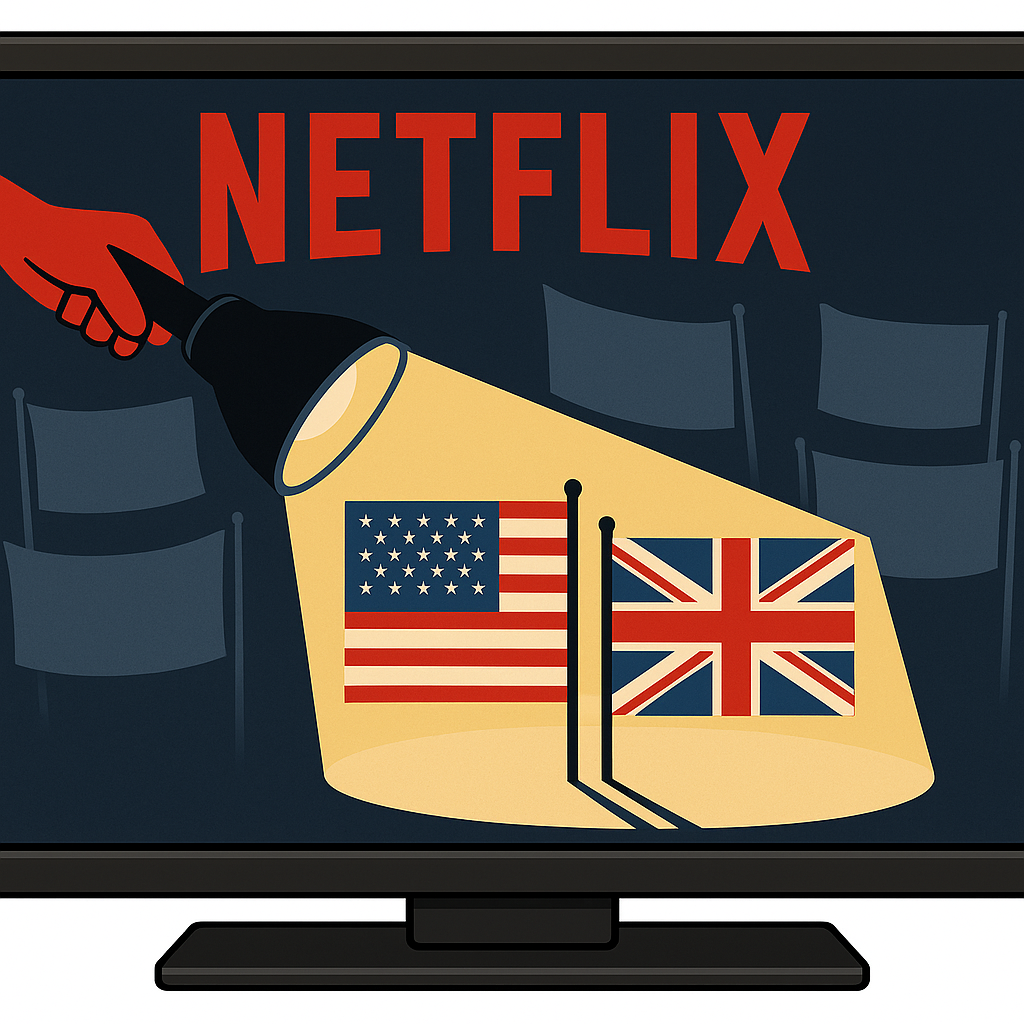
Evidence:I created a poster showing Netflix as a spotlight shining on American and British flags while other blank flags fade into darkness. This visual represented English dominance over global entertainment.
Visuals can communicate an argument instantly — sometimes more effectively than paragraphs.
I used design choices intentionally: the spotlight represented power, the shadows represented inequality, and the blank flags symbolized ignored cultures.
It made me realize that literacy today isn’t just reading and writing — it includes visual communication. This expanded my understanding of what academic argument can look like.

This entry is licensed under a Creative Commons Attribution-NonCommercial-ShareAlike 4.0 International license.

